New Poetry Collection
by
Seth Wieck | November 2, 2025
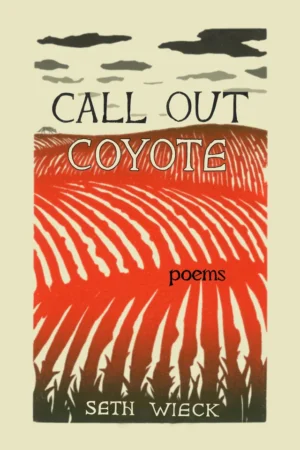
My latest collection is now available to order from Wiseblood Books. It will be shipped in February 2026. I’ve been trying to figure out ways to talk about this book in a way that makes sense, but this collection is 20 years in the making. It’s like attempting to describe 20 years of your life. Where do I start? Maybe hunting rabbits with my dad on Christmas Day 2004, when I began writing the earliest poem for this book? A fair number of these poems have been published before, so if you’re curious about what sorts of poems might be included, then check out the Publications page. Poke around. If you like them, then I’d like to invite you to purchase the book from Wiseblood Books (eventually it will be on the big online bookstore). And while you’re here, scroll through my Commonplace. I like to keep track of things that I read (I’m not very disciplined about it), but so many of those things make their way into the poems. Thanks for reading!
Read More
The Swan
by
Seth Wieck | April 11, 2025
…now Cycnus out of Troy,
the son of Neptune, cut his thousand down,
and now Achilles in his chariot
pressed on relentlessly against his foe,
flattening ranks of Trojans with each thrust
of his great spear, fashioned out of wood
from a tree harvested on Pelion;
and as he searched for Hector or for Cycnus…
…Achilles hurled another spear with his strong hand,
but once again did not inflict a wound
on the undamaged body of his foe,
nor did a third spear even land on Cycnus,
although he offered himself openly;
you will have seen a bull in the arena,
who, with his terrifying horns, pursues
the provocation of a scarlet cape,
only to discover that he’s missed it:
Achilles, raging, was not otherwise…
…He found Cycnus in the fray:
unerring ash struck unevading shoulder,
the left one, with a thud–then bounded off
as from a wall or from a solid cliff:
Achilles saw that Cycnus had been bloodied
where he had struck him and rejoiced–in vain:
there was no wound…
Achilles could endure no more of this:
with shield and sword hilt as his weapons, he
assaulted him about the face and head,
blow after blow, until, as one gives way
the other one pursues, perturbs, keeps pressing him,
gives him no time to pull himself together.
Fear seizes Cycnus, and his vision blurs;
the path he flees on is obstructed by
the path he flees on is obstructed by
the boulder in the middle of the plain;
as he lies with his back pressed hard against it,
Achilles seizes him and whirls him round
and flings him heavily against the earth.
Then kneeling on his shield on Cycnus’ breast,
he strips the thongs that tied his helmet on
beneath the chin, and wraps them round his throat
and strangles him.
Preparing to despoil
his conquered enemy, he notices
the armor that he seeks has been abandoned,
for Neptune took the body of his foe
and transformed Cycnus into that white bird
whose name, until quite recently, he bore.
Ovid. Metamorphoses. Book XII. Cycnus. Translated by Charles Martin. pg 409.
…One of the most interesting and beautiful of the constellations, both in its natural peculiarities and in its evangelic references. It consists of eighty-one stars–one of the first or second magnitude, six of the third, and twelve of the fourth; and some of these never set. It embraces at least five double stars and one quadruple. The binary star (61 Cygni) is the most remarkable known in the heavens. It is one of the nearest to our system of the fixed stars. It consists of two connected stars, which, besides their revolution about each other, have a common progressive and uniform motion toward some determinate region, and moving thousands of times faster than the swiftest body known to our system. This constellation has a number of distinct systems in itself, and shows planetary nebulae which have led astronomers to regard it as the intermediate link between the planetary worlds and the nebulous stars. It has in it specimens of both, and lies in the midst of the great Galactic Stream of nebulous stars. It is therefore remarkably suited to represent that peculiar and complex economy–partly celestial and party terrestrial, partly acting by itself and partly dependent on the heavenly powers–by which grace and salvation are carried and ministered to the children of men.
The figure in this constellation is the figure of a swan, the lordly bird-king of the waters, in all ages and in all refined countries considered the emblem of poetic dignity, purity, and grace. By the Greeks and Romans it was held sacred to the god of beauty and the Muses, and special sweetness was connected with its death…
…As the white dove is the emblem of the Holy Ghost, so the elegant, pure, and graceful swan is a fitting emblem of Him who, dying, sends forth the glad river of living waters, and presides in His majesty over the administration of them to the thirsty children of men. And this is here the underlying idea.
But this swan is on the wing, in the act of rapid flight, “circling and returning,” as its name in Greek and Latin signifies. It seems to be flying down the Milky Way, in the same general direction with the river which pours from the heavenly urn. The principal stars which mark its wings and length of body form a large and beautiful cross, the most regular of all the crosses formed by the constellations…we find strong identifications of this lordly bird-king of the waters with Him who, through the preaching of His cross hither and thither over all this nether world, cries and says, “If any man thirst, let him come unto Me, and drink.”
Greek and Roman mythology is greatly at a loss to account for the presence of this bird in the sky; but the stories on the subject are not destitute of thought and suggestion corresponding with the evangelic truth. The Greeks enumerated a collection of characters of different parentages and histories, each reputed to have ben the original of this swan in the heavens. One was the son of Poseidon, an ally of the Trojans, who could not be hurt with arms of iron, but was strangled by Achilles–who body, when the victor meant to rifle it, suddenly took its departure to heaven in the form of a swan… Christ was of divine birth and nature, He was himself invincible. He did submit to death in heroic conflict with the powers of darkness and the just penalties due the sins of the world. It was His great love for those to whom He became a Brother that brought him down to the dark river. His body did take life again after death, and disappear into a new form of brightness and glory to assume position in the heavens.
Joseph Seiss. The Gospel in the Stars, or Primeval Astronony. 1882. Chapter 8: The Living Waters. Pgs 78-79. Republished again in 2015 by Martino Publishing.
A phrase of Cornelius Agrippa flew through his mind and then there flew hither and thither shapeless thoughts from Swedenborg on the correspondence of birds to the things of the intellect
James Joyce. Portrait of the Artist as a Young Man.
The Divine Will accomplishes like results in the case of birds, and causes those known as alites, which give omens by their flight, to fly hither and thither and disappear now here and now there, and causes those known as oscines, which give omens by their cries, to sing now on the left and now on the right.
Cicero. On Divination.
Read More
Piano Player
by
seth | April 1, 2025
In the cleared space in the middle of the room, a tired-looking man in a worn tuxedo was beating the life out of an exhausted grand piano. All of the furniture, including the piano, was enameled a garish orange. A sequence of orange-haired nudes romped and languished along the walls under a glaze of grime.
The pianist could have passed for a corpse in any mortuary if he had only stayed still, instead of tossing his fingers in bunches at the suffering keyboard. His batting average in hitting the notes was about .333, which would have been good enough for a Coast League ball-player. He was white and loaded to the gills, it was hard to tell with what.
The Way Some People Die. Ross Macdonald. Page 149 (Chapter 27), Library of America edition.
Read More